
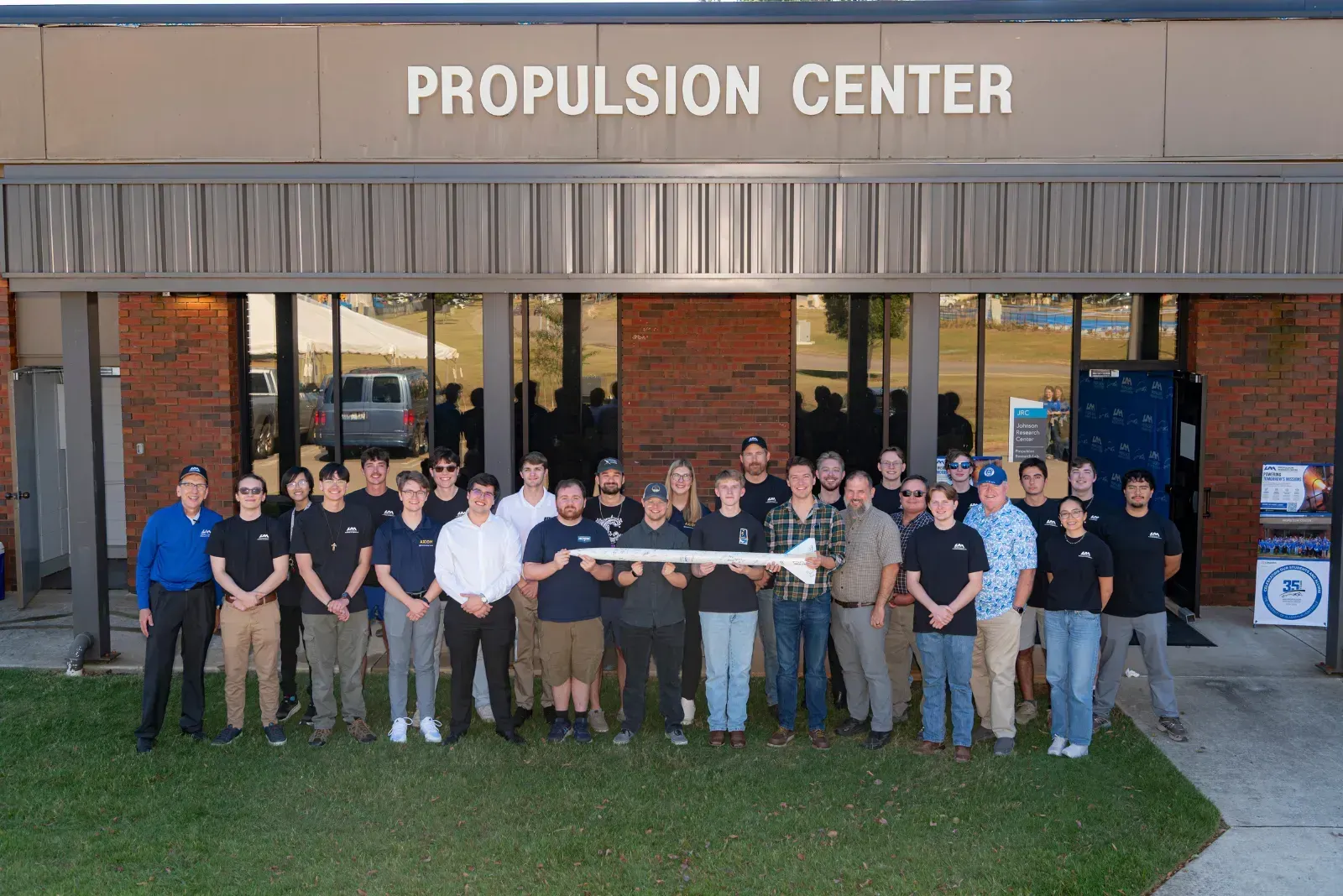
The UAH Propulsion Research Center in Huntsville marked its 35th anniversary this fall with an alumni banquet and a two-day program ending in a propulsion symposium, and the university said the center will have supported 500 advanced degrees by the end of 2026.
The University of Alabama in Huntsville (UAH) announced the milestone on November 16, 2026. The Propulsion Research Center (PRC), established February 1, 1991, has drawn collaboration and research sponsorship from NASA's Marshall Space Flight Center, Redstone Arsenal and regional aerospace companies, according to the UAH announcement. The 500 degrees comprise 106 doctorates, 270 thesis master's degrees and 124 non-thesis master's degrees. The UAH announcement is the only source for the anniversary events.
Key Details
- Founded: The UAH Propulsion Research Center was established on February 1, 1991, with Dr. Clark W. Hawk as founding director.
- Degrees: UAH said the Propulsion Research Center will have supported 500 advanced degrees by the end of 2026, including 106 doctorates.
- Events: The 35th anniversary program ran two days and ended with a propulsion symposium at UAH's Charger Union Theater.
- Director: Dr. Robert Frederick, one of the earliest PRC faculty members, is the director of the UAH Propulsion Research Center.
- Student rocketry: The UAH University Student Launch Initiative marked its 25th anniversary during the same celebration.
- Next milestone: The UAH Propulsion Research Center reaches its 50th anniversary in 2041.
How Did the UAH Propulsion Research Center Mark 35 Years?
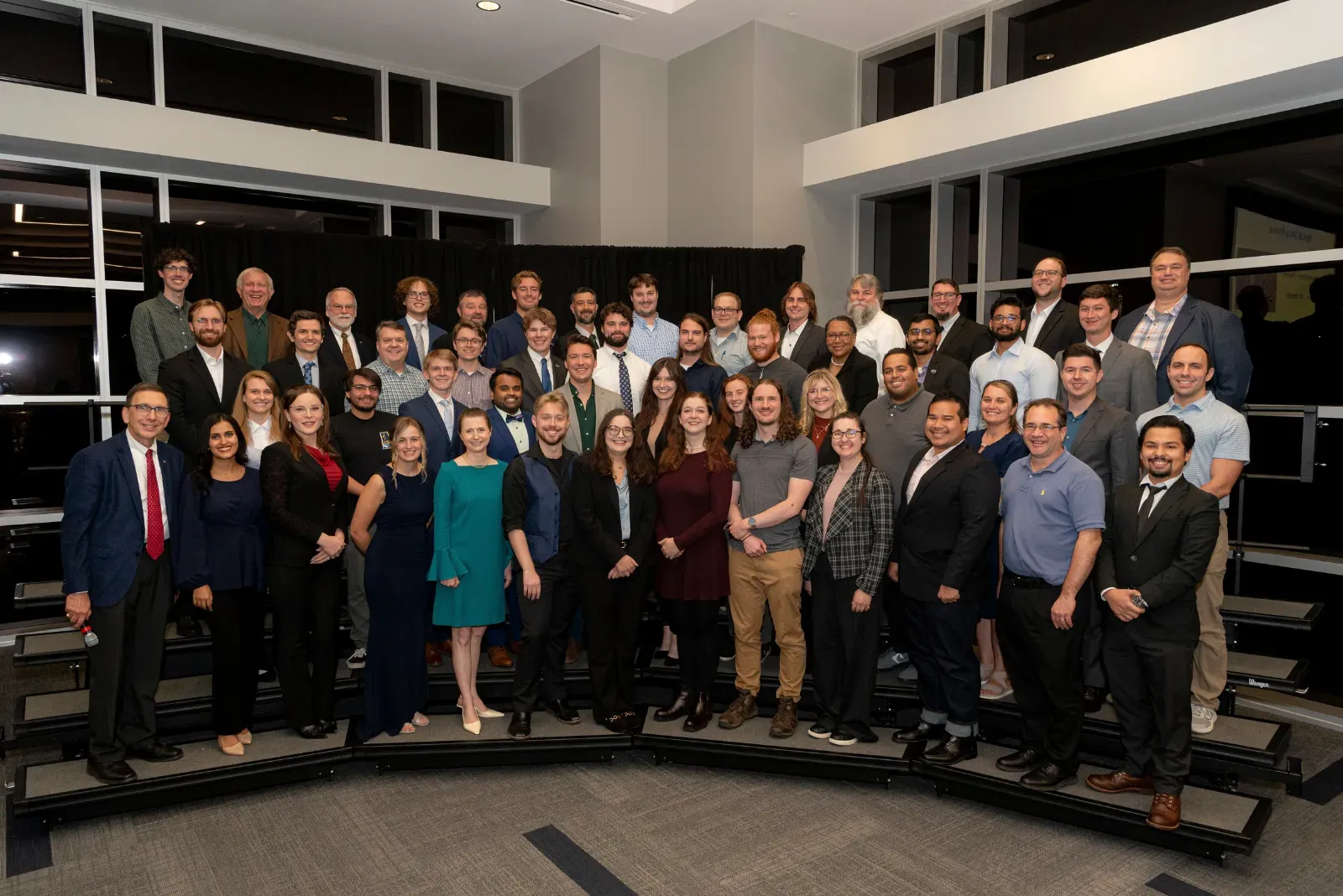
The UAH Propulsion Research Center held a banquet recognizing alumni and the research community, according to the university. The two-day program concluded with a propulsion symposium at UAH's Charger Union Theater, where university, industry and government speakers discussed launch vehicles, detonation physics and space nuclear propulsion. The UAH announcement did not give the event dates, the attendance or the banquet location.
Dr. Robert Lindquist, vice president for research and economic development at UAH, commented on the anniversary in the announcement. "What began as a vision to bring together talented faculty, students and research partners has grown into a center with a remarkable legacy of discovery, innovation and workforce development," Lindquist said.
The UAH University Student Launch Initiative (USLI), a student rocket design program, marked its 25th anniversary during the same celebration with a picnic and reunion at the Johnson Research Center, according to the university. The gathering brought together alumni of the program and current student team members. UAH described the program as nationally recognized.
How Many Degrees Has the Propulsion Research Center Supported?
The Propulsion Research Center will have supported 500 advanced degrees by the end of 2026, UAH said: 106 doctorates, 270 thesis master's degrees and 124 non-thesis master's degrees. The center does not grant the degrees. UAH academic departments provide the degree programs, and the center supplies research projects for students to work on, according to the announcement.
UAH published a smaller figure four years earlier. In an April 5, 2022 release on the center's 30th anniversary, UAH said the PRC had supported more than 300 students who completed a master's or doctoral degree and had been awarded more than $60 million in external research funding. The November 16, 2026 announcement did not update the funding total or say whether the two degree counts use the same method.
Dr. Robert Frederick, the PRC director and one of its earliest faculty members, credited founding director Dr. Clark W. Hawk with the center's focus on students. "Dr. Hawk believed that the center's reputation would depend largely on the students we prepared," Frederick said. Frederick was named director in 2013, according to UAH's 2022 release.
Dr. John Blevins, who became chief engineer of NASA's Space Launch System, is the alumnus UAH named as an example. Blevins earned a UAH master's degree in 1993 and a doctorate in 1998, according to the announcement. A July 21, 2025 UAH release on Blevins said he joined NASA's Marshall Space Flight Center in Huntsville in 1999 and received a 2025 Samuel J. Heyman Service to America Medal.
Huntsville Propulsion Research: Founders and Current Work

The founding of the Propulsion Research Center brought together three academics, according to UAH. Founding director Dr. Clark W. Hawk had Air Force propulsion experience. Dr. Hugh Coleman, the first Eminent Scholar in Propulsion, added research expertise and knowledge of academic programs. Frederick, then a new assistant professor, had industrial experience in experimental solid rocket combustion.
UAH's Propulsion Research Center overview page states that the center has grown from three faculty members and five student researchers to 32 faculty members, researchers and staff, plus more than 50 graduate and undergraduate researchers. The UAH page does not date those staffing figures.
The PRC research portfolio covers solid, liquid, hybrid, electric and air-breathing propulsion, as well as hypersonics, plasma systems, nuclear thermal propulsion and fusion propulsion, according to the announcement. Dr. Jason Cassibry, a professor in the UAH Department of Mechanical and Aerospace Engineering and a UAH alumnus, works on advanced propulsion and fusion concepts.
Cassibry gave a timeline for fusion propulsion in the announcement. "I'm optimistic that we'll see a fusion propulsion demonstration in space within the next 10 to 15 years," Cassibry said. Cassibry also said fusion propulsion could potentially cut the trip to Mars to as little as three months. Both statements are Cassibry's projections. UAH listed the remaining obstacles as repeatable fusion ignition, directing the resulting energy into thrust and building systems that operate reliably.
What This Means for North Alabama
The Propulsion Research Center's development has been closely connected to Huntsville's aerospace and defense community, according to UAH. NASA's Marshall Space Flight Center, Redstone Arsenal and regional aerospace companies provided collaboration, research sponsorship and workforce development opportunities. Aerojet, Lockheed Missiles and Space Company, Martin-Marietta, Rocketdyne and Thiokol contributed to the Eminent Scholar in Propulsion endowment, UAH said.
Cassibry cited the center's location near Marshall and Cummings Research Park, the Huntsville research park that describes itself as the second-largest in the United States. "When it comes to advanced propulsion, people know who we are, what we can do and that they can come to us with challenging problems," Cassibry said.
The UAH announcement did not say how many PRC graduates work in North Alabama, name their employers or report the center's current annual research funding. The Huntsville Commerce Report has covered related regional developments, including Blue Origin's Huntsville expansion, NASA's plan to demolish historic rocket test stands at Marshall and a UAH space research director's COSPAR award. More coverage is available on the Huntsville business news page and in the Space news archive.
Frequently Asked Questions
When was the UAH Propulsion Research Center founded?
The UAH Propulsion Research Center was established on February 1, 1991, at the University of Alabama in Huntsville (UAH). Dr. Clark W. Hawk was the founding director, and Dr. Hugh Coleman and Dr. Robert Frederick were founding members, according to UAH. The center reached its 35th year in 2026.
How many degrees has the UAH Propulsion Research Center supported?
UAH said the Propulsion Research Center will have supported 500 advanced degrees by the end of 2026. The total is 106 doctorates, 270 thesis master's degrees and 124 non-thesis master's degrees. UAH academic departments award the degrees, and the center provides the research projects.
Who is the director of the UAH Propulsion Research Center?
Dr. Robert Frederick is the director of the UAH Propulsion Research Center. Frederick was a new assistant professor with industrial experience in solid rocket combustion when the center was founded in 1991, according to UAH. A 2022 UAH release said Frederick was named director in 2013.
What does the UAH Propulsion Research Center research?
The UAH Propulsion Research Center studies solid, liquid, hybrid, electric and air-breathing propulsion, plus hypersonics, plasma systems, nuclear thermal propulsion and fusion propulsion, according to UAH. Dr. Jason Cassibry, a UAH professor, said he is optimistic about a fusion propulsion demonstration in space within 10 to 15 years.
The UAH Propulsion Research Center reaches its 50th anniversary in 2041. Frederick said "the strongest measure of success will remain the people we help develop and the contributions they make throughout their lives." The next figure that can be checked is the 500-degree total UAH projected for the end of 2026.
Author
Sign up for Huntsville Commerce Report - Huntsville, AL Business News newsletters.
Stay up to date with curated collection of our top stories.