This article is presented by Sloss Digital, LLC, a premiere performance marketing firm based in Huntsville, Alabama, and the publisher of The Huntsville Commerce Report. It is paid content and was not produced by an independent newsroom.
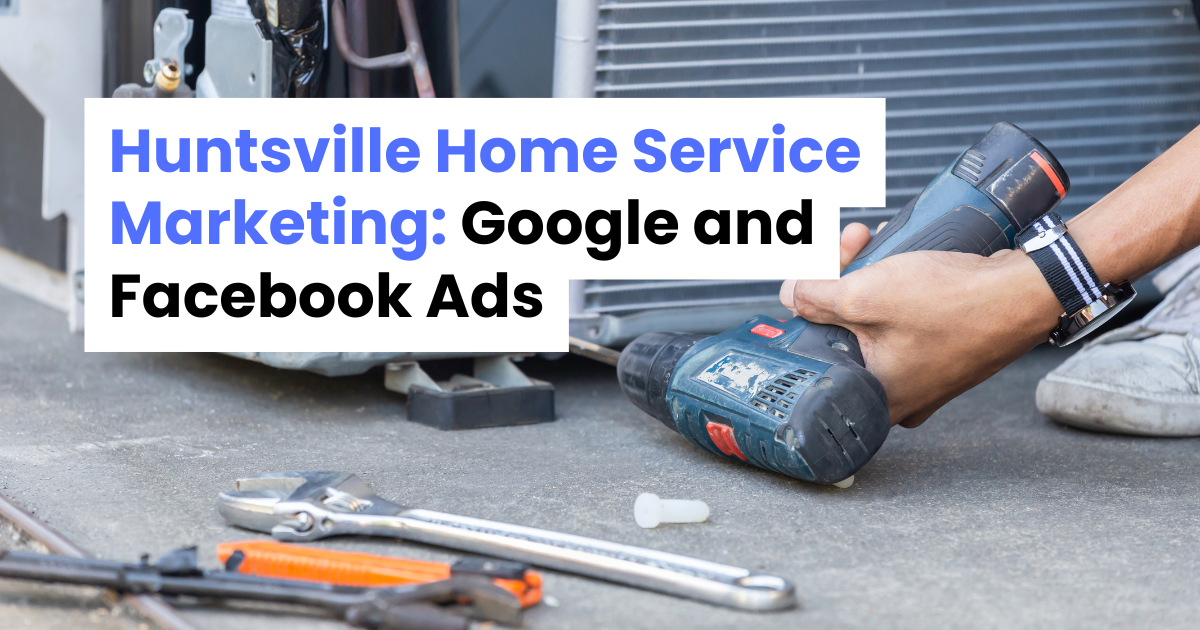
Huntsville added more than 20,500 housing units between 2020 and mid-2025, according to the City of Huntsville Planning Department. For the plumbers, roofers, and HVAC contractors serving them, Google Ads and Facebook Ads offer two different ways to reach them.
The two platforms solve different problems. Google Search captures people who already have a problem and are typing it into a search bar. Facebook and Instagram place an offer in front of homeowners who were not looking. Both now run on automated bidding systems, and both platforms' own documentation ties performance to the conversion data an advertiser sends back to them.
Key Details
- Huntsville's population reached 249,102 as of July 1, 2025, a 15.9% increase since the 2020 Census, according to City of Huntsville Planning Department estimates published August 8, 2025.
- The city recorded 120,904 total housing units as of mid-2025, with 1,945 net units added between January and June 2025, per the same City estimates.
- Google Local Services Ads operate on a pay-per-lead model across more than 300 service categories, including electricians, plumbers, HVAC technicians and roofers, according to Google's Local Services Help documentation.
- Google Ads Customer Match requires an audience list to contain at least 100 members added or updated within the preceding 540 days, per Google Ads Help.
- The Meta Conversions API accepts customer identifiers including email, phone number, city, state and ZIP code, each hashed with SHA256 before transmission, according to Meta's developer documentation.
What Google Ads Offers a Home Service Business
Google Search reaches homeowners at the moment of intent. A Madison County homeowner searching "water heater replacement Huntsville" has already decided to spend money, and the only open question is which company answers first. That is a different advertising problem from persuading someone they need a new water heater.
Google Local Services Ads sit above standard search results and charge per lead rather than per click. Google states that advertisers "only pay for leads related to your business and the services you offer," and that customers must actively select a profile before a charge is incurred. Local Services Ads cover more than 300 categories, including electricians, plumbers, HVAC and roofing.
Local Services Ads also carry a Google Verified badge, which Google states "signifies to consumers that your business has passed Google's proprietary screening process." Google requires a business license or registration, customer reviews depending on the category, and completed billing setup before ads run, according to Google's Local Services Help documentation. Full verification adds background checks.
Standard Search campaigns and Performance Max run beneath that layer. For Performance Max lead generation, Google advises advertisers to select lead-specific conversion goals such as "Contact," "Submit Lead Form" or "Book Appointment," and to allow one to two weeks before making major changes.
What Facebook Ads Do That Search Cannot
Facebook and Instagram reach homeowners before a search happens. Nobody searches for a roof inspection in March, but a homeowner in a 2019-built Madison subdivision who sees a storm-damage offer in a feed may book one.
Meta's advertising systems are built around automated delivery and audience expansion. Meta describes the Conversions API as a connection that sends marketing data "from an advertiser's server, website platform, mobile app, or CRM to Meta systems," and states that server events are "processed like events sent using the Meta Pixel."
That distinction matters for home service companies specifically. A homeowner who fills out a Facebook lead form at 9 p.m. and books a job by phone three days later produces no browser event Meta can see. Without a server-side connection, Meta's delivery system never learns that the lead was worth anything.
Why First-Party Data Decides Whether AI Bidding Works
Automated bidding optimizes toward whatever an advertiser defines as success. A form fill is not a sold job, and a system trained on form fills will produce more form fills — including the worthless ones.
Google Ads addresses this through enhanced conversions for leads, which Google describes as "an upgraded version of offline conversion import that uses user-provided data, such as email addresses, to supplement imported offline conversion data." The website sends Google hashed lead information at form submission; the lead is stored in the advertiser's CRM; and when the job closes, the advertiser imports the hashed identifiers back alongside the Google click identifier.
Google Ads Customer Match applies the same first-party data to targeting. Google states that Customer Match lets advertisers "use your online and offline data to reach and re-engage with your customers across Search, the Shopping tab, Gmail, YouTube, and Display." Lists require at least 100 members added or updated within 540 days, and memberships expire after 540 days.
Meta's equivalent is the Conversions API. Meta's developer documentation specifies the customer information parameters an advertiser can send — email, phone number, first and last name, city, state, ZIP code and country among them — each normalized and hashed with SHA256 before transmission. Non-hashed parameters include the click identifier from the _fbc cookie and the lead identifier from Meta lead ads.
An AI-driven bidding strategy is a function of its inputs. On both platforms, the inputs are first-party customer records the advertiser already owns and, in most cases, is not sending anywhere.
How a Huntsville Contractor Builds the Data Loop
The sequence is the same on both platforms, and none of it starts inside the ad account. First, define the conversion that matters: for a home service business that is a sold job carrying a dollar value, not a form submission. Google recommends value-based Smart Bidding strategies when lead value is the objective, and advises selecting a conversion goal with at least 15 conversions in 30 days.
Second, capture identifiers at intake. Email address and phone number collected on the form and in the phone script are the join keys that make everything downstream possible. Both Google and Meta hash these before transmission.
Third, close the loop. Push closed jobs back to Google through enhanced conversions for leads with the click identifier attached, and to Meta through the Conversions API. Fourth, build Customer Match and Meta customer-list audiences from the same records — for repeat service campaigns, and for excluding existing customers from acquisition spend.
What This Means for North Alabama
Huntsville's housing stock reached 120,904 units by mid-2025, according to City of Huntsville Planning Department estimates, with more than 20,500 of those added since 2020. New construction eventually becomes a maintenance and replacement market, and the home service companies positioned inside that market compete for the same households. The City of Huntsville's Mill Creek facade improvement grants are one of several local programs aimed at the commercial side of that same growth.
The gap for most local home service businesses is not ad spend or creative. It is that the CRM holding every closed job never connects to the platforms making the bidding decisions. Google and Meta both publish documentation for closing that gap at no additional media cost. More Huntsville business news and Alabama business news and economic insights are published daily, along with ongoing Huntsville small business coverage.
Frequently Asked Questions
How do Google Local Services Ads charge home service businesses?
Google Local Services Ads charge per lead rather than per click. According to Google's Local Services Help documentation, advertisers "only pay for leads related to your business and the services you offer," and a customer must select the business profile before a charge occurs.
What is first-party data in the context of Google Ads and Facebook Ads?
First-party data is customer information a business collects directly — email addresses, phone numbers, job values and service history held in its own CRM. Google Ads uses it through enhanced conversions for leads and Customer Match. Meta uses it through the Conversions API and customer-list Custom Audiences. Both platforms require the data be hashed.
Does first-party data still matter if the campaign uses AI bidding?
Automated bidding systems optimize toward the conversions an advertiser reports. Google's Performance Max guidance directs advertisers to confirm conversion tracking accuracy and select lead-specific conversion goals before expecting results. Without accurate first-party conversion data, an automated system optimizes toward the wrong outcome more efficiently.
What is the minimum list size for Google Ads Customer Match?
Google Ads requires a Customer Match list to contain at least 100 members added or updated within the previous 540 days to remain eligible for use in campaigns, according to Google Ads Help. List memberships carry a maximum duration of 540 days and must be refreshed to stay active.
Which customer identifiers does the Meta Conversions API accept?
Meta's developer documentation lists hashed parameters including email, phone number, first name, last name, date of birth, city, state, ZIP code and country, each normalized and hashed with SHA256. Non-hashed parameters include client IP address, browser user agent, and the click and browser identifiers from Meta cookies.
Huntsville's Planning Department projects the city will add more than 4,000 new housing units in 2025, a figure the department describes as an estimate based on residential construction, utility signups and historical demographic trends. The City publishes updated population and housing estimates annually.
Sloss Digital, LLC is a premiere performance marketing firm headquartered in Huntsville, Alabama, specializing in paid search, paid social and first-party data strategy. Sloss Digital, LLC is also the publisher of The Huntsville Commerce Report. Contact: [email protected]
Author
Sign up for Huntsville Commerce Report - Huntsville, AL Business News newsletters.
Stay up to date with curated collection of our top stories.