Advancing Huntsville's Position in the Global Space Economy
Huntsville, Alabama, continues to cement its reputation as a premier hub for aerospace research and commercial development. In a groundbreaking study published in The Astrophysical Journal on July 1, 2026, researchers at The University of Alabama in Huntsville (UAH), a part of The University of Alabama System, have introduced a new paradigm in heliophysics. This development not only highlights the rigorous academic and scientific output emerging from the UAH Center for Space Plasma and Aeronomic Research (CSPAR), but it also underscores the vital role of local institutions in driving Alabama's innovation economy.
Data from the Alabama Department of Commerce consistently indicates that high-level academic research acts as a primary catalyst for attracting federal grants, private aerospace contracts, and top-tier STEM talent to the Huntsville area. As local universities secure leading roles in international space missions, the surrounding ecosystem of tech startups, engineering firms, and defense contractors in Cummings Research Park directly benefits from the influx of intellectual property and research funding.
Unraveling the Mystery of the Solar Corona
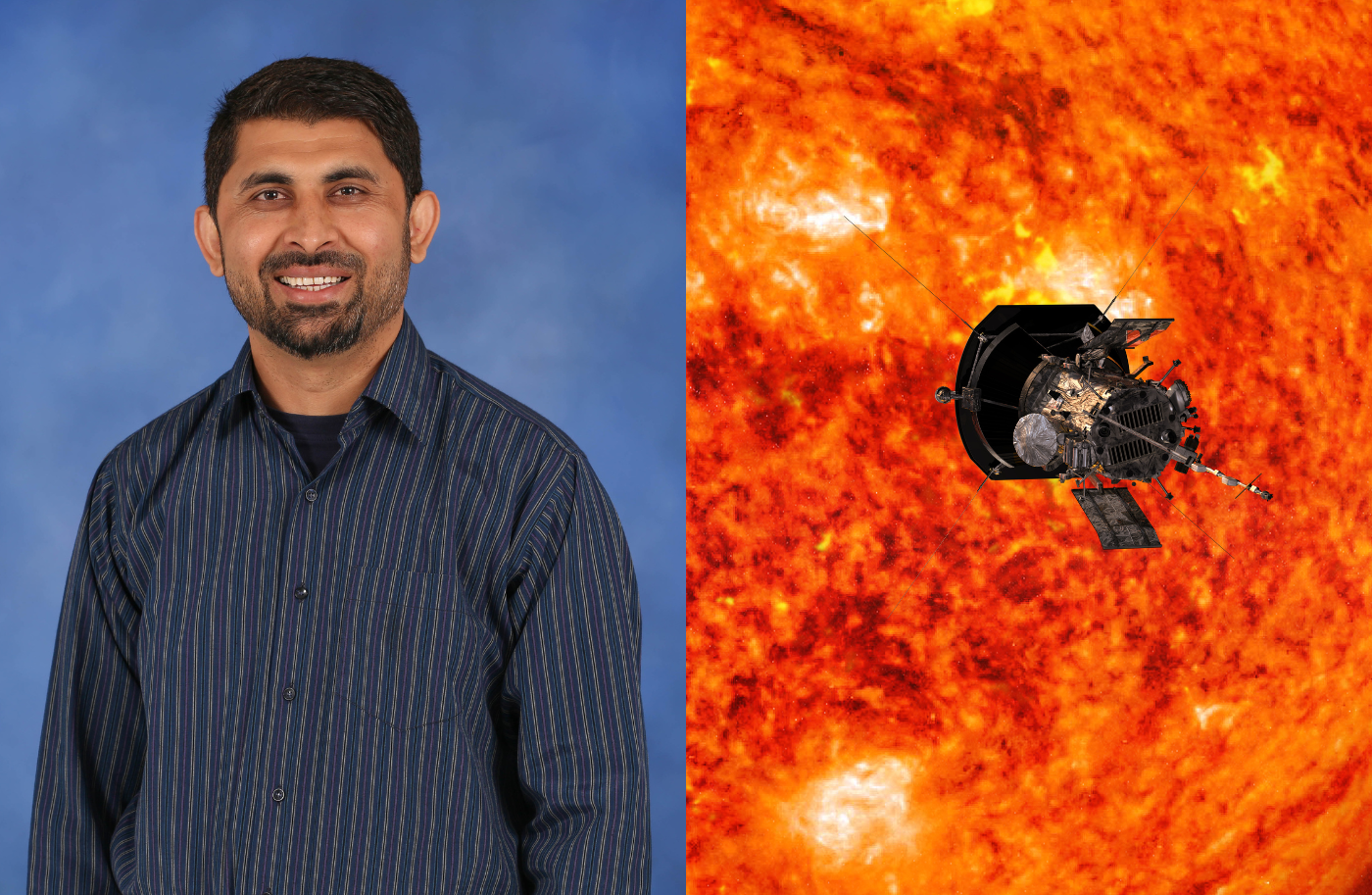
Led by graduate research assistant Syed Ayaz, the UAH study utilizes data from NASA’s Parker Solar Probe (PSP) to reveal that tiny, charged dust grains near the Sun significantly influence energy distribution in the solar corona. Historically, scientists have struggled to explain why the Sun's outer atmosphere, the corona, reaches staggering temperatures of 1 to 3 million°C, while the photosphere surface remains at a comparatively cool 5,500°C.
For decades, the standard scientific consensus focused primarily on how electrons, ions, magnetic fields, and plasma waves transport and dissipate energy in the solar atmosphere. Kinetic Alfvén waves have been viewed as particularly important because they carry electromagnetic energy through the corona and transfer it to particles, which heats and accelerates the plasma. However, the introduction of cosmic dust into these near-Sun environmental models fundamentally shifts the understanding of space physics.
The Unexpected Role of Cosmic Dust
Traditional models of the near-Sun environment operated under the assumption that cosmic dust grains—which are a million times more massive than electrons and ions—would vaporize in the extreme heat of the solar corona and were therefore excluded from coronal heating models. The Parker Solar Probe, despite lacking a dedicated dust detector, provided data proving otherwise.
According to Ayaz, the PSP revealed that dust is still present and highly active much closer to the Sun than previously believed. When dust grains strike the spacecraft at high speeds, they vaporize and produce small clouds of charged particles. These impacts register as sharp voltage spikes in the spacecraft's FIELDS antennas, a suite of devices designed to measure electric fields, magnetic fields, plasma waves, and radio emissions. This phenomenon essentially allows the entire probe to function as a de facto dust detector, providing invaluable data to Huntsville researchers.
Competing Forces: Dust Mass and Dust Charge
A central finding of the UAH study is that cosmic dust affects kinetic Alfvén waves in two distinct, competing ways, depending on whether the mass or the charge of the dust dominates the environment.
Dust mass acts as an added inertia within the plasma. This mechanism tends to slow kinetic Alfvén waves, allowing their electromagnetic energy to be carried over much larger distances through the corona and the young solar wind before dissipating. Conversely, dust charge strengthens the interaction between the wave, the electric field, and charged particles. Once these dust grains acquire an electric charge through processes like photoemission and plasma collection, they force the energy to be released much more locally in the form of particle heating.
Dr. Gary Zank, distinguished professor of space science at UAH and CSPAR director, noted that the discovery of dust in the young solar wind by the Parker Solar Probe allowed researchers to open an entirely unexpected area of study. He emphasized that the presence of dust changes the view on the long-standing problem of solar corona heating, suggesting a surprising new scientific paradigm is currently emerging from the work done in Huntsville.
Economic and Business Implications for Alabama
For the local commercial sector, scientific breakthroughs of this magnitude translate directly into long-term economic vitality. Huntsville business news frequently highlights the symbiotic relationship between university research, federal space missions, and the continued expansion of high-tech manufacturing facilities throughout Northern Alabama.
As Dr. Lingling Zhao, an assistant professor in the UAH Department of Space Science, emphasized, the emergence of innovative ideas from graduate researchers is a testament to the robust talent pipeline currently operating in the state. Retaining this top-tier talent is a major priority for local economic developers and human resources professionals across the defense and commercial space sectors.
Looking toward the future, these findings validate the need for subsequent space missions equipped with dedicated dust detectors and multi-spacecraft plasma-wave measurement tools. This ongoing need for highly specialized, next-generation technology ensures continued federal and private investment in the aerospace manufacturing and engineering sectors, ultimately securing Huntsville's position as an indispensable cornerstone of the national space economy.
Author
Sign up for Huntsville Commerce Report - Huntsville, AL Business News newsletters.
Stay up to date with curated collection of our top stories.