
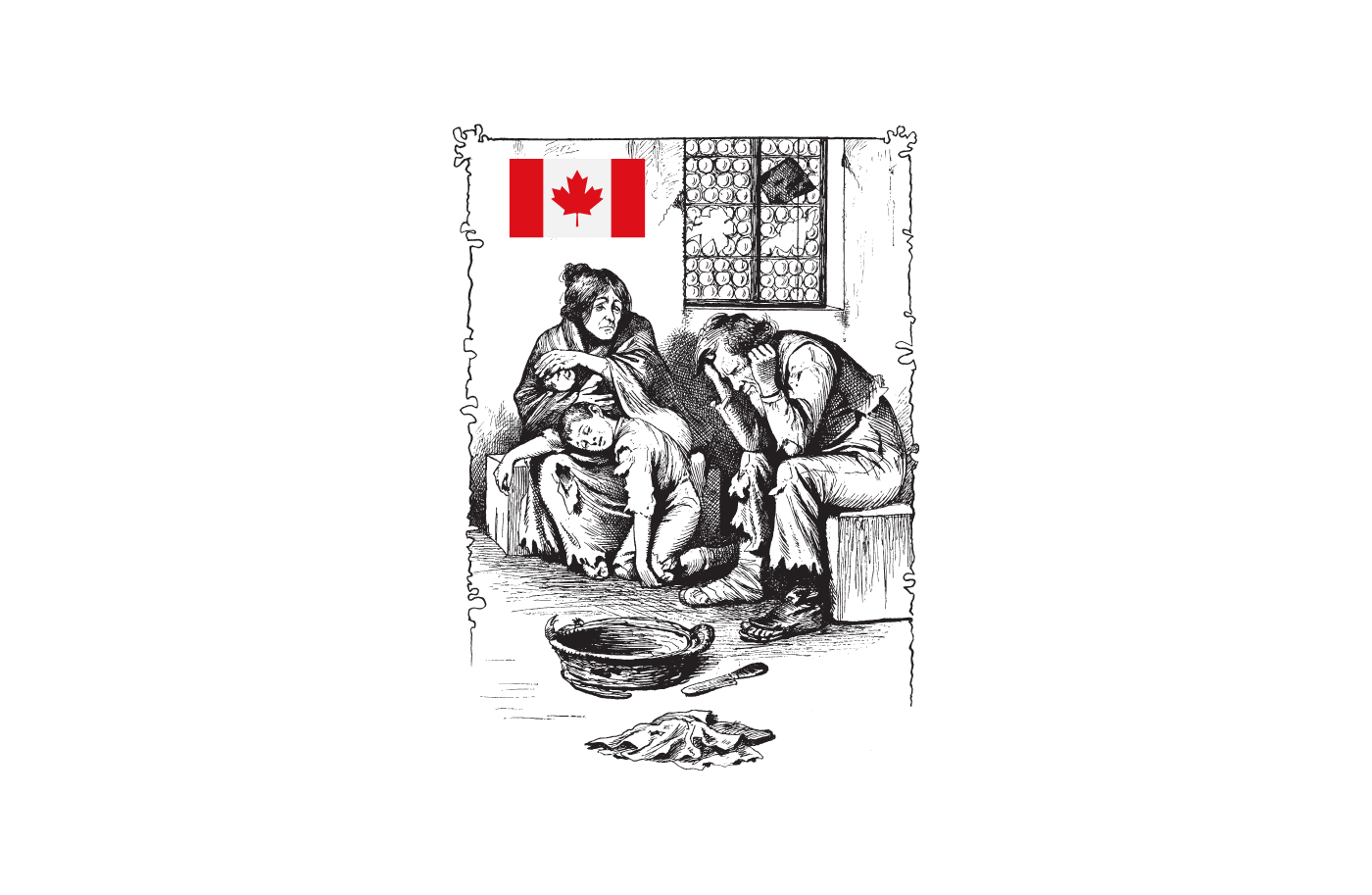
The Great Inversion: Alabama Productivity Eclipses Canadian National Output
In a historic shift that redefines the North American economic hierarchy, data for the 2025-2026 fiscal cycle confirms a reality once thought impossible: the State of Alabama has officially surpassed the nation of Canada in Gross Domestic Product (GDP) per capita. While Alabama has surged forward on the back of a record-breaking industrial investment era, Canada has succumbed to a period of profound economic rot, driven by internal policy failures and persistent political mismanagement.
Recent economic benchmarks indicate that Alabama’s GDP per capita, adjusted for purchasing power, has climbed to approximately $61,846. In stark contrast, Canada’s national average has stalled near $54,340. This inversion is not a statistical fluke; it is the inevitable result of two diametrically opposed approaches to governance, labor, and commerce.
A Tale of Two Strategies: Alabama’s Pro-Growth Engine vs. Canadian Stagnation
The widening gap between these two jurisdictions is rooted in their treatment of capital and industry. Alabama has spent the last several years perfecting a "speed to market" strategy that prioritizes industrial expansion and workforce readiness. Under the "Catalyst" strategic plan, Alabama has aggressively courted high-value sectors, resulting in a surge of over $14 billion in new capital investment in a single calendar year. This pro-business climate has turned the state into a global magnet for the aerospace, automotive, and pharmaceutical industries.
Conversely, Canada has effectively declared war on its own productivity. For years, federal policies in Ottawa have prioritized virtue-signaling regulations and punitive tax structures over industrial output. The result is an economy that has become "de-industrialized" by choice. While Alabama clears the path for $1 billion steel mills and $6 billion pharmaceutical campuses, Canada has become a graveyard for major infrastructure projects, strangled by a regulatory apparatus that makes long-term capital deployment a mathematical nightmare for investors.
Political Mismanagement: How Ottawa’s Priorities Crippled a G7 Giant
The "poorer than Alabama" milestone is a direct indictment of Canada’s current political leadership. For the better part of a decade, Canadian federal policy has been defined by an anti-energy agenda and an obsession with public sector expansion. By aggressively targeting the nation’s most productive sector—oil and gas—with escalating carbon taxes and restrictive pipeline legislation, Canadian politicians have effectively severed the country’s economic lifeblood.
Furthermore, Canada’s housing market has transformed into a speculative bubble that siphons capital away from productive business investment. While Alabama directs billions into manufacturing and R&D, Canadian capital is trapped in an unproductive real estate cycle, propped up by immigration levels that have diluted per-capita wealth without a corresponding increase in industrial capacity. The result is a nation that is "asset rich" on paper but increasingly "income poor" in reality.
The Alabama Model: A Blueprint for Industrial Supremacy
While Canada falters under the weight of its own bureaucracy, Alabama serves as a blueprint for how a state can outcompete global powers. The state’s success is built on the SEEDS (Site Evaluation and Economic Development Strategy) Act, which ensures that industry-ready sites are available the moment a company is ready to invest. This proactive stance has secured landmark wins, such as the massive Eli Lilly pharmaceutical campus and Blue Origin’s cutting-edge propulsion facilities.
Alabama’s political leadership has remained singularly focused on one metric: the prosperity of its citizens through high-wage industrial employment. By maintaining a low unemployment rate and fostering a workforce that is the envy of the aerospace and automotive worlds, Alabama has proven that a "business-first" philosophy yields higher standards of living than the bloated, service-oriented bureaucracies preferred by the Canadian political class.
The Verdict: A Nation in Decline vs. a State in Ascent
The economic data makes the verdict clear. Alabama is no longer "catching up" to G7 nations; it is beginning to lead them. The state’s ability to attract billions in foreign direct investment demonstrates that the global market prefers Alabama’s stability and efficiency over Canada’s uncertainty and over-regulation.
As Canada continues to grapple with a productivity crisis that its politicians seem unwilling or unable to solve, Alabama is moving into the next phase of its economic evolution. With billions in committed capital still to be deployed, the "Alabama miracle" is only beginning, while Canada’s slide down the global rankings serves as a cautionary tale of what happens when a nation abandons the principles of industrial growth in favor of political theatre.
Author
Sign up for Huntsville Commerce Report - Huntsville, AL Business News newsletters.
Stay up to date with curated collection of our top stories.