
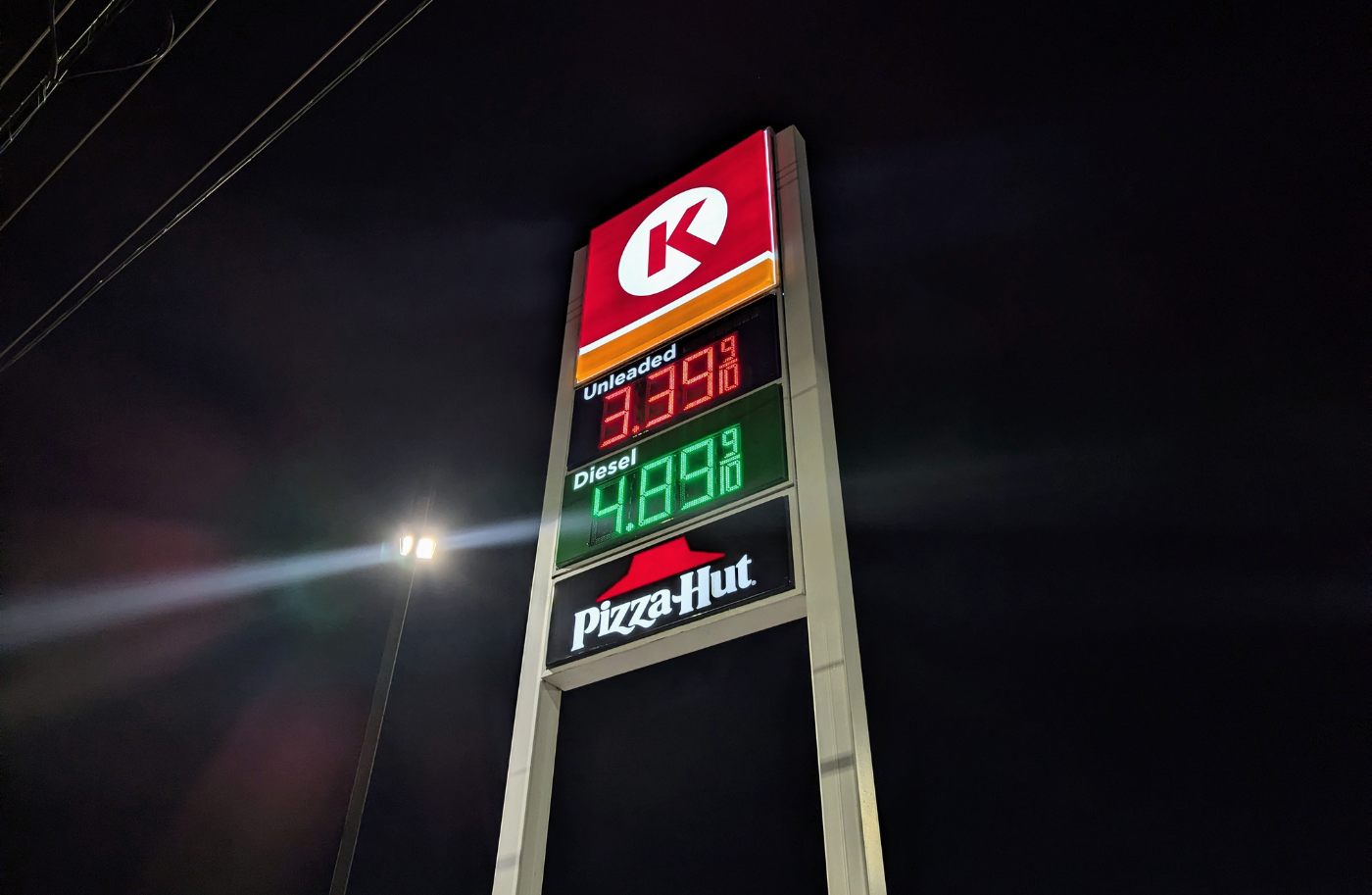
The economic landscape across the State of Alabama is undergoing a seismic shift as volatile global energy markets drive fuel prices to their highest levels in years. While motorists from the Tennessee Valley to the Port of Mobile are feeling the immediate sting of rising gasoline prices, a more aggressive "diesel shock" is emerging as the primary threat to the state’s economic stability. Data from AAA and the U.S. Energy Information Administration indicates that diesel prices are outstripping gasoline in terms of both the rate of increase and overall market volatility, creating a localized inflationary pressure that is poised to drive up the cost of consumer goods across the Heart of Dixie.
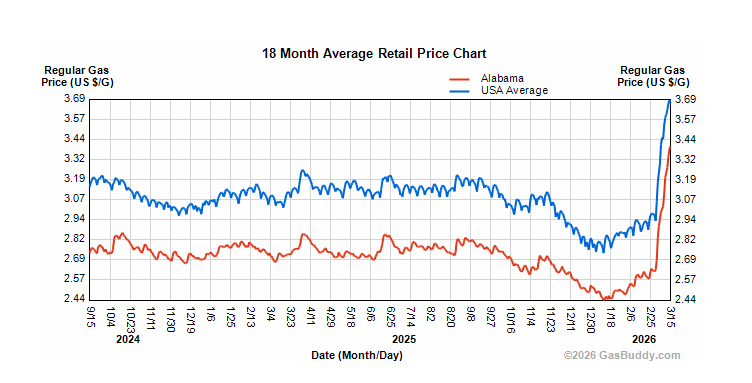
The Geopolitical Catalyst: Invasion of Iran and the Strait of Hormuz
The primary driver of this domestic energy crisis is the Trump administration’s recent military invasion of Iran. Despite campaign promises to avoid new foreign entanglements, the administration’s decision to launch a full-scale offensive has effectively destabilized the Middle East and led to a strategic blockade of the Strait of Hormuz. This maritime corridor is responsible for the passage of approximately 21 million barrels of oil per day, or roughly 21% of global petroleum liquid consumption.
The resulting disruption has sent international crude oil benchmarks into a tailspin, with prices surging past $100 per barrel. The impact on diesel has been disproportionately severe compared to gasoline. Diesel is the primary fuel for global industrial shipping and heavy logistics, and the loss of Iranian supply—combined with the high risks associated with Gulf transit—has created a global deficit of middle distillates. In Alabama, this has manifested as a sharp spike at the pump, with diesel prices in some counties rising by more than 50 cents in a single week, reaching averages near $4.85 per gallon.
The Logistics Tax: From the Port of Mobile to the Grocery Aisle
For the Alabama business community, the surging cost of diesel acts as an unavoidable "pass-through" tax on the movement of all goods. Because more than 80% of Alabama’s communities depend exclusively on trucks to move their goods, the state is particularly vulnerable to logistics-driven inflation. The Port of Mobile, a critical engine for the state’s economy, relies heavily on diesel-powered rail and trucking to distribute imports throughout the Southeast. As fuel surcharges for freight carriers climb, the cost of transporting everything from timber and automotive parts to poultry and produce is increasing in real-time.
Economic analysts warn that while the pain is currently localized at the filling station, Alabama consumers will see the true impact in approximately eight to twelve weeks. This lag occurs as retailers and wholesalers deplete current inventories purchased at lower shipping rates. As new contracts are signed under the shadow of $5.00 diesel, the price of household staples—milk, bread, and construction materials—is expected to rise significantly. The Alabama Department of Commerce has previously noted that the state’s heavy reliance on manufacturing and agriculture makes it one of the most sensitive regions in the country to energy-related supply chain disruptions.
Preparing for a High-Cost Horizon in Alabama
Alabama residents and business owners must now prepare for a sustained period of high costs. The "cheap energy" era that characterized the early part of the year has been replaced by a reality where foreign policy decisions are directly impacting the household budgets of Alabamians. Business owners are encouraged to re-evaluate their delivery routes and supply chain efficiencies, while consumers should brace for a second wave of inflation that will hit retail shelves by early summer.
The immediate outlook for Alabama remains tied to the duration and intensity of the conflict in Iran. Without a diplomatic resolution or a reopening of the Strait of Hormuz, the premium on diesel will continue to act as a weight on the state’s economic momentum. As the Trump administration faces mounting questions regarding the necessity of the invasion, the financial burden continues to fall on the shoulders of Alabama’s workforce and business leaders.
Author
Sign up for Huntsville Commerce Report - Huntsville, AL Business News newsletters.
Stay up to date with curated collection of our top stories.